
 SIGN UP FOR STELLAR MAIL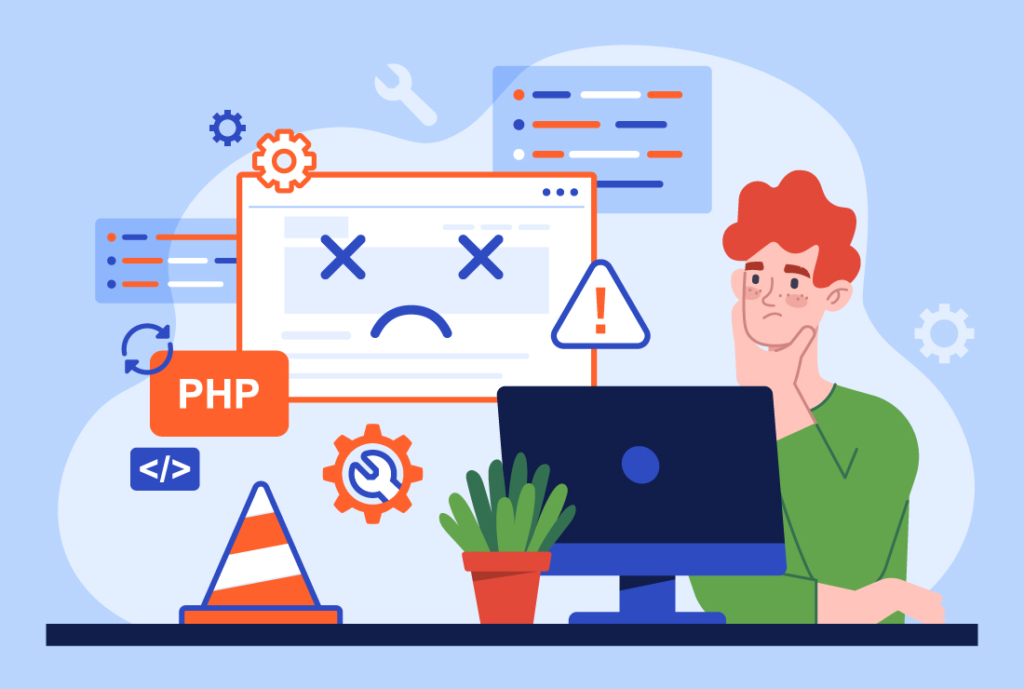
Even if you manage a WordPress website for your business, there’s a good chance you’ve never heard of PHP, but that’s okay. Simply put, it’s the behind-the-scenes bedrock that quietly keeps your website running.
It’s important to keep an eye on your site’s PHP because hosting providers often drop support for older versions, and websites that haven’t kept up will often break. If your site is running an outdated version of PHP, it could be slower, more vulnerable to attacks, or on the verge of some major headaches.
What is PHP and why does it matter?
Let’s start with the basics: PHP is a programming language that powers your WordPress website. Think of it like the engine in a car—you don’t see it when you’re driving, but without it, your car’s not going anywhere. PHP runs everything behind the scenes on your site: loading pages, displaying images, processing contact forms, and making sure your plugins and themes work properly.
It’s what makes things happen when someone fills out a form, adds a product to their cart, or loads a blog post. PHP takes the request, pulls the right content or data from the server, and delivers it to the user’s screen. Without it, your site wouldn’t be able to display pages, process payments, or collect information, making it a key component of a functioning website.
Because PHP is working in the background, most website owners never really interact with it—and that’s totally normal. But just like any technology, PHP requires updates over time. Newer versions are faster, more secure, and better equipped to handle the demands of modern websites.
If your site is running on an older version of PHP, it may still seem fine on the surface. But underneath, it could be slow, vulnerable to security threats, or on the edge of breaking when your website host updates their systems. That’s why staying current with PHP isn’t just a technical detail; it’s a crucial part of keeping your website running smoothly and safely.
In short, even if you’ve never heard of PHP before today, it plays a large role in your website’s health. Keeping it up to date is one of the simplest, smartest things you can do to protect your investment.
Why you need a supported version of PHP for WordPress websites
So if PHP has been running quietly in the background this whole time, why are we suddenly making a big deal about it?
The short answer: the internet is constantly moving forward, and your hosting provider probably is too. Many web hosts phase out support for older PHP versions, which means your website may be automatically upgraded to a newer version—whether it’s ready or not.
That’s where things can get tricky.
If your site was built more than a few years ago, the version of PHP it’s running on may no longer be supported. This can cause parts of your site, like contact forms, image galleries, or even entire pages, to stop working. And if you’re using outdated plugins or custom features, they might break completely.
By getting ahead of these updates, we can review your site, identify any issues, and make the necessary fixes before anything goes live. That means no broken features, no panicked calls to support, and no unexpected downtime that could cost your business leads or sales.
The good news is you don’t need to have the most up-to-date version of PHP. As long as you’ve updated it in the last four years, you’re likely using a version that is still supported. If you’re curious about which versions of PHP are currently supported, you can look here.
So even if PHP updates weren’t on your radar, they’re definitely something worth paying attention to now. A little proactive work today can save you a lot of stress down the road.
What happens if you don’t update PHP on your WordPress site?
You might be wondering, “What’s the worst that could happen if I just leave things as they are?” Fair question—and the answer is, unfortunately, quite a bit.
Here’s what can go wrong when your site is running on an outdated version of PHP:
- Your site might slow down. Newer PHP versions lead to faster page load times and a more seamless experience for your visitors. Older versions can bog things down, which can frustrate potential customers and hurt your SEO rankings.
- Plugins and themes might stop working. Many plugin and theme developers design their products to work with a supported version of PHP. If your site is still using an unsupported version, those tools may not function correctly, or at all, after updates.
- You’re more vulnerable to hacks and malware. Older PHP versions don’t receive security updates, which means they’re easier for hackers to exploit.
Ignoring PHP updates can cause your website to be left behind and put it at risk. The longer you wait, the more complicated (and expensive) the fix can become. Taking action now helps avoid future headaches and keeps your site working the way your business needs it to.
How to audit your WordPress website for PHP compatibility
Not sure what version of PHP your website is using, or if it needs updating? Don’t worry. Most WordPress site owners aren’t keeping tabs on their PHP version, and that’s totally understandable.
Here’s how you can get started:
- Ask your hosting provider. Many hosts let you view or change your PHP version from your hosting dashboard. If that sounds overwhelming, a quick support chat with your host can usually provide you with the information you need.
- Check your site health. You can visit the Site Health section in the back end of your WordPress website to view your current version of PHP.
- Ask a developer or support team. If you’re not comfortable checking things yourself, that’s what we’re here for. If you’re a Stellaractive client, we can audit your site, test it in a safe environment, and handle any updates for you—without disrupting your live site.
Whether you want to DIY it or have someone do the heavy lifting for you, it’s worth taking the time to check. A quick audit now can prevent bigger problems down the road and help keep your website running smoothly.
The End Result: A faster, more secure WordPress Website
Once your website is running on the latest version of PHP, you’ll start seeing the benefits pretty quickly, even if you never log into your site’s backend.
Here’s what you can expect:
- Faster load times. Your pages will load quicker, which keeps visitors engaged and helps improve your search engine rankings.
- Better plugin and theme performance. Many tools are built to work best with current PHP versions, so everything just runs more smoothly.
- Stronger security. Staying up to date means your site is protected from known vulnerabilities that hackers often exploit.
- Easier future updates. Once your site is compatible with a newer version of PHP, updating plugins, themes, and WordPress itself becomes much less risky.
- Peace of mind. You’ll know your site is on a solid foundation and less likely to have unexpected issues.
In other words, updating PHP is one of those behind-the-scenes improvements that can make a big difference in how your website performs and how confidently you can grow your business online. It’s a small step with big rewards.
Ready to future-proof your WordPress site?
If it’s been a while since your last PHP update, or if you’re looking for a new website hosting partner, Stellaractive is here to help. We’ll review your site, test for compatibility, and handle the update safely so you can enjoy improved speed, stronger security, and fewer technical headaches. Contact us today or give us a call at 503-384-2413. Keep your website working for your business, not against it.